

Prominent AI Services LLP
Technology & SaaS

AI & Software Solutions for Technology & SaaS

AI features that fit your product. Delivery that fits your team.

Help product teams add useful AI, search, analytics and integrations to existing software platforms.

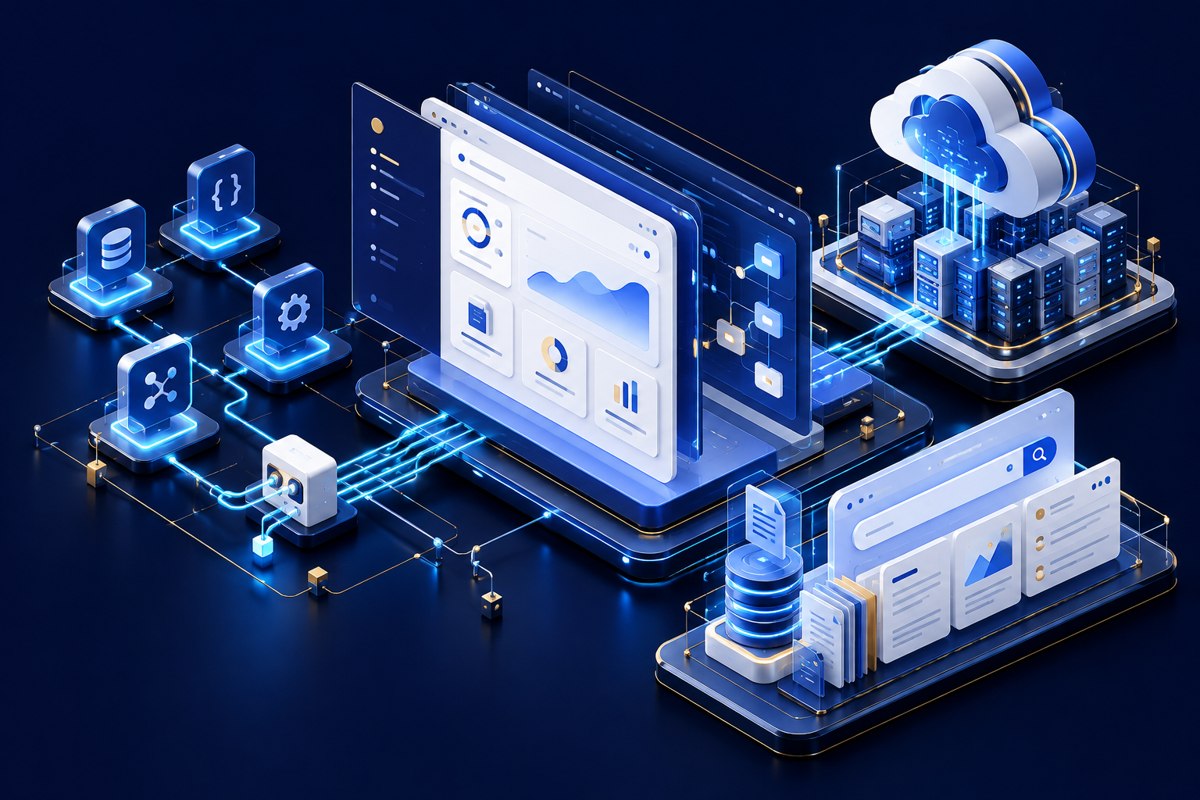
Illustrative technology & saas systems connected through data and software workflows.
Illustrative solution ecosystem, not a completed client project.
  • Workflow automation
  • Data integration
  • Human-reviewed AI

Built for your part of the ecosystem

Solutions for organizations and teams working across technology & saas.

Start with the workflow that needs improving

  • AI experiments are disconnected from product permissions and user journeys.
  • Knowledge and search features need reliable source access and evaluation.
  • Product modernization must respect existing APIs, tenants and delivery practices.

Practical solutions for complex workflows

Illustrative solution areas; scope, applicability and acceptance criteria are validated during discovery.

  • AI feature integration

    Add a focused model-backed feature to an existing product workflow.

    Typical inputs: User journey, permitted context and model requirements.

    Practical output: An evaluated feature with fallbacks and usage controls.

  • Knowledge assistants

    Retrieve approved product or customer knowledge with tenant-aware access.

    Typical inputs: Curated sources, permissions and evaluation questions.

    Practical output: Source-backed responses with escalation and feedback.

  • Intelligent search

    Build retrieval around product records, documents and relevance requirements.

    Typical inputs: Permitted records and representative search tasks.

    Practical output: A tested search experience with controllable relevance.

  • Product analytics

    Connect agreed events and definitions to answer product questions.

    Typical inputs: Permitted usage events and metric definitions.

    Practical output: A documented analytics model and dashboards.

  • Application modernization

    Improve a defined part of the product architecture or experience.

    Typical inputs: Existing code, constraints and agreed target behavior.

    Practical output: A tested increment with migration and rollback notes.

  • API & cloud delivery

    Connect product interfaces and delivery environments with operational controls.

    Typical inputs: API contracts, infrastructure constraints and deployment requirements.

    Practical output: Documented integrations and monitored delivery pipelines.

From disconnected information to connected workflows

Bring your systems, data and teams together with applications, useful AI assistance and clear human responsibility.

  1. Source systems

    Product APIs & events
    Approved knowledge sources
    Tenant & identity context

  2. Integration & data

    Approved connectivity
    Data mappings
    Source traceability

  3. Applications & AI assistance

    Work queues & portals
    Reporting & search
    Reviewable drafts

  4. Human review & action

    Authorized teams
    Specialist review
    Approvals & decisions

Access controls · Audit logging · Monitoring · Agreed retention

Example applications in your operating context

Illustrative workflows using synthetic information, not completed client projects.

Tenant-aware knowledge search

A user asks a product question, retrieval applies their permissions and a draft answer cites authorized source material.

Discuss this workflow

Product feature rollout

A feature is evaluated against a baseline, released to an agreed cohort and monitored with rollback controls.

Discuss this workflow

Designed around your data and operating requirements

Controls and deployment choices are scoped to your environment and intended use.

  • Access & permissions

    Tenant isolation, permission-aware context and appropriate data handling.

  • Traceability & review

    Task-based evaluations, fallback behavior and review of generated outputs.

  • Deployment & integration

    Latency, usage cost, release controls and ownership agreed with your product team.

Illustrative features need evaluation in your product context. Model output quality, latency and cost vary; no universal accuracy or business-growth guarantee is implied.

A stack selected for your environment

Examples of technologies discussed for these workflows. Final selection depends on existing systems, access, licensing and evaluation.

Data & analytics

  • PostgreSQL

Technology marks identify products only; they do not imply partnerships, certifications or endorsement. Specialist industry standards and platforms are assessed individually rather than assumed compatible.

A clear path from discovery to deployment

A collaborative delivery approach with concrete outputs.

  1. Discover & scope

    Understand the workflow, users, systems, constraints and acceptance criteria.

    Output: Agreed project scope
  2. Design & prototype

    Define interfaces, permissions and a prototype for the key user journey.

    Output: Solution prototype
  3. Build & validate

    Implement, test and validate the agreed workflow with your team.

    Output: Tested working increment
  4. Launch & support

    Deploy with handover, monitoring and the agreed improvement plan.

    Output: Deployment & handover

Questions before you start?

Answers about starting a technology & saas software, data or AI project.

Can you add AI to an existing SaaS product?

Yes, where the workflow, data access and product architecture support the use case. Discovery assesses tenant boundaries, identity, interfaces, latency and cost before agreeing a feature scope.

How do you evaluate a knowledge assistant?

We define representative questions, approved sources and expected behavior, including unavailable information and restricted content. Evaluation checks retrieval, answer support, permission boundaries and escalation.

Do you need to replace our current platform?

A focused integration or modernization increment may be sufficient. We assess the existing product and recommend changes according to the agreed use case and constraints.

Can your engineers collaborate with our product team?

The engagement can define shared delivery practices, API contracts, code review and handover. Dedicated development options are linked below for teams needing ongoing capacity.

Who owns the code and what about model costs?

The agreement defines source-code ownership and third-party licensing. Model-provider charges, hosting and operational support are identified as separate assumptions or costs in the proposal.

Let’s improve your technology & saas workflows.

Tell us about your users, systems and priorities.

Discuss Your Technology & SaaS Project